Natural henna vs black henna: what to know before you book
As a henna artist in Charleston SC, the question I hear most is whether a henna tattoo is safe. The answer depends entirely on what is in the paste, so here is how natural henna differs from so-called black henna.
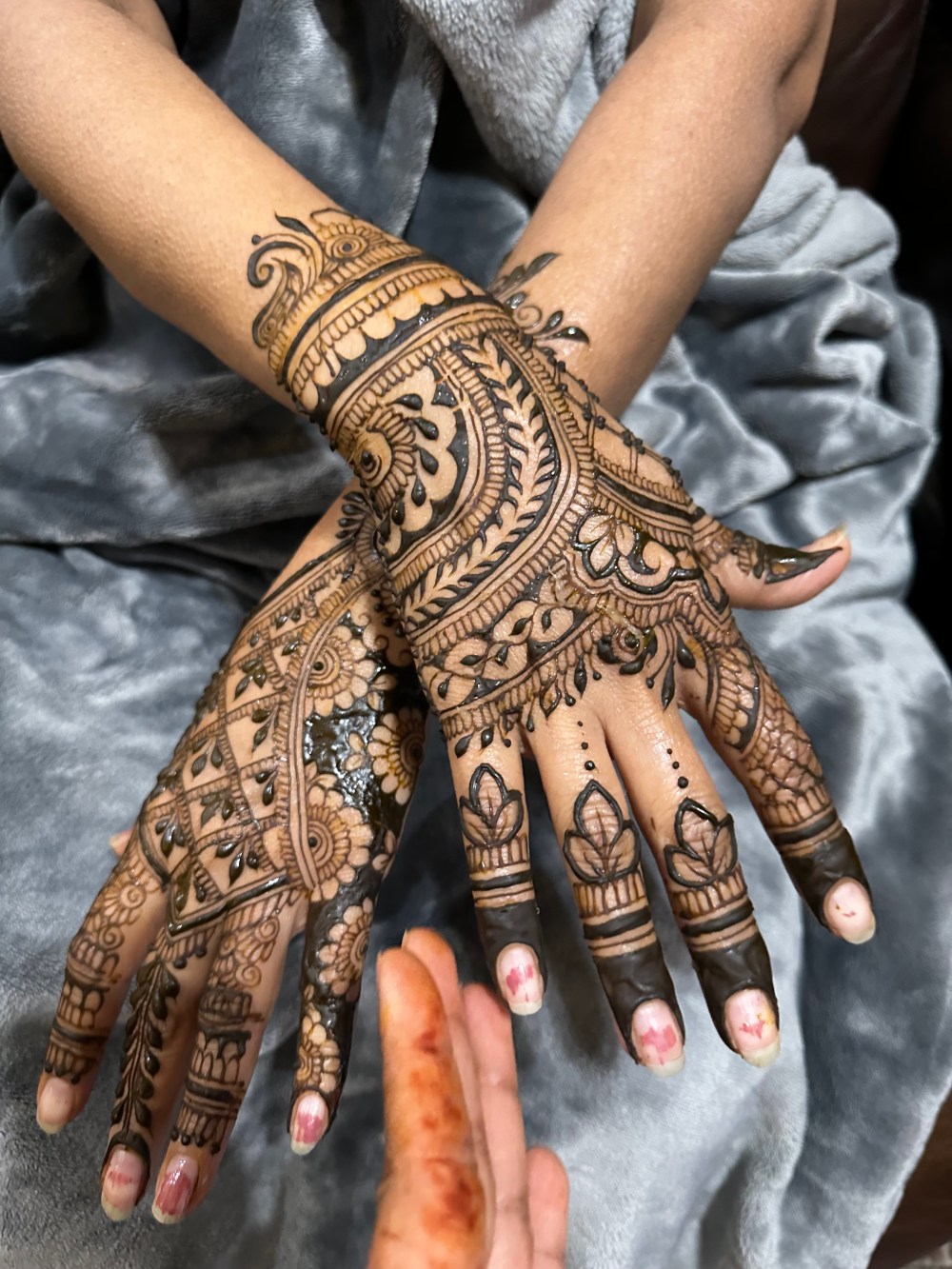
What natural henna is
Natural henna comes from the dried leaves of the henna plant, Lawsonia inermis. The leaves are ground into a fine powder and mixed into a paste. The dye molecule in the leaves is called lawsone, and it binds to the top layer of your skin to leave a stain.
People have used henna for celebrations for generations, and it is still the heart of bridal mehndi today. When a mehndi artist uses real henna, the result is a warm, earthy stain, never a jet black one.
What black henna really is
Black henna is not a type of henna. It is a marketing name for products that are often colored with PPD, a hair dye chemical. The FDA warns that PPD on the skin can cause blistering, scarring and lasting sensitivity.
Because the effects can show up after the design is applied, someone can leave an event happy and then react days later. That is why I never use black henna, and why I encourage everyone to ask what is in their paste before any henna tattoo.
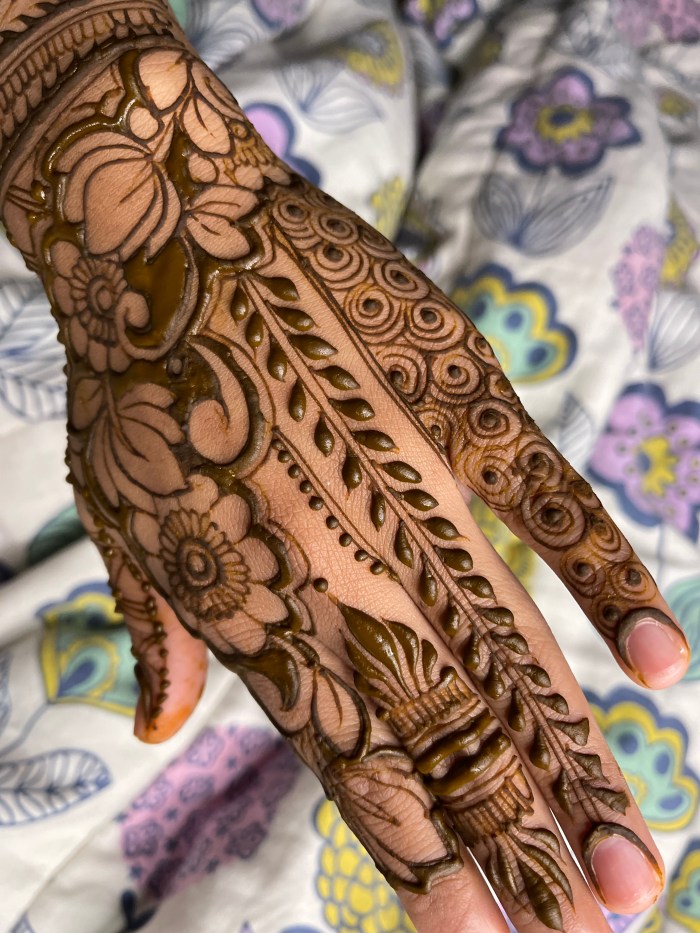
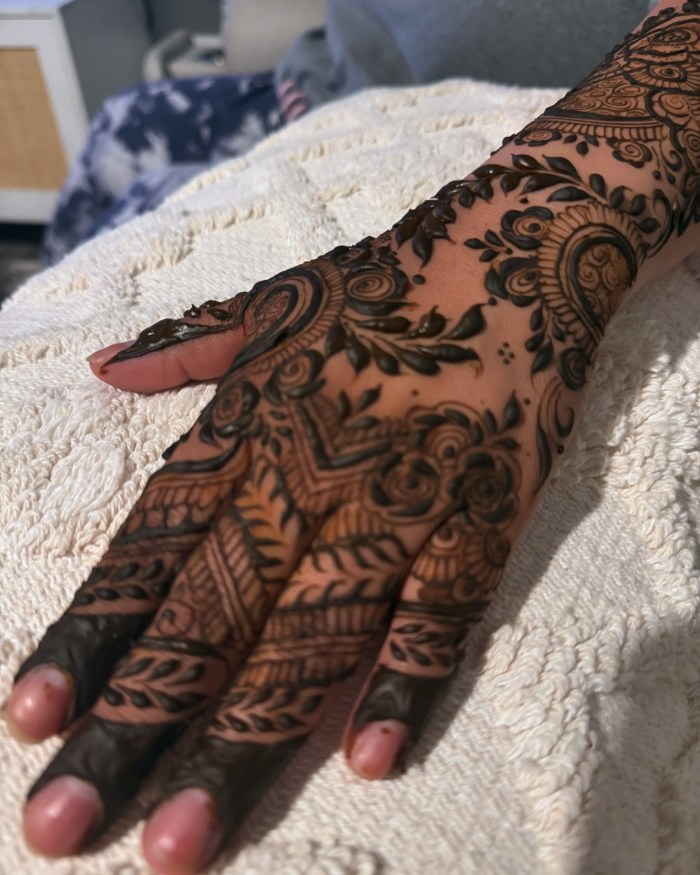
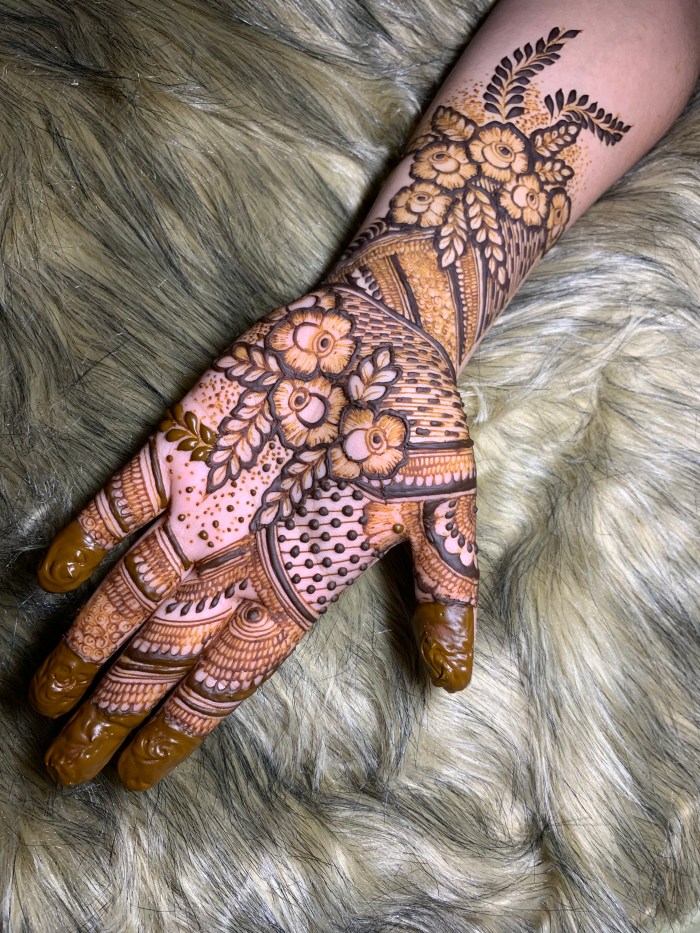
How to tell real henna from black henna
A few simple checks can protect you, whether you are booking a bridal artist or visiting a boardwalk stand.
- Natural henna is never jet black. If the stain goes on black, be cautious.
- Real henna stains orange at first, then deepens to reddish brown over about 48 hours.
- A trustworthy artist can tell you exactly what is in the paste and will answer your questions openly.
- Natural henna paste smells earthy and herbal. A sharp chemical smell is a warning sign.
- Stay away from any product described as fast, instant or ready in minutes with a deep black result.
Why natural henna starts orange
Many first-time clients are surprised when the paste comes off and the design looks bright orange. That is exactly how natural henna should look. The lawsone needs time to oxidize, so the color deepens gradually to a reddish brown over about 48 hours.
Hands and feet stain darkest, and the stain lasts 1 to 3 weeks. Keeping the paste on for 6 to 8 hours or overnight, staying warm, and avoiding water for 12 to 24 hours all help the color develop. If a stain is dark and black right away, it is not natural henna.
What is in my henna and how I keep it safe
I use 100% natural, organic henna only. There is no PPD, no chemical dye and no black henna in anything I use. Every design is freehand, never traced, printed or stenciled, and I have been drawing henna professionally for more than 10 years.
If you have sensitive skin or an allergy to essential oils, I offer a patch test before your event so you can feel confident. If you have any health concerns, please talk with your doctor first.
Ask me anything about my ingredients. I am always glad to explain, because informed clients are happy clients.
Common questions
Is black henna the same as natural henna?
No. Natural henna comes from the dried leaves of Lawsonia inermis. Black henna is often colored with PPD, a hair dye chemical the FDA warns can cause blistering, scarring and lasting sensitivity.
Can natural henna be black?
No. Natural henna is never jet black. It stains orange when the paste comes off and deepens to reddish brown over about 48 hours.
Why is my henna orange right after I remove the paste?
That is normal for natural henna. The lawsone oxidizes over time, so the color deepens to a rich reddish brown within about 48 hours.
How long does natural henna last?
Usually 1 to 3 weeks. Hands and feet tend to stain darkest and hold the color longest.
Do you offer a patch test?
Yes. A patch test is available if you have sensitive skin or essential oil allergies. Just let me know when you reach out.
More from POPHENNA
Book natural henna you can trust
If you are planning bridal henna or a party and want a mehndi artist who uses only natural henna, send me your details through the contact form. I reply within 24 to 48 hours.
pophenna.sn@gmail.com
